The initiative to ban scrap metal exports from Ukraine goes against the World Trade Organization regulations, conditions of the Association Agreement with the European Union and even international practice. The opponents of the sales of scrap metal in the foreign markets – steel makers, insist that without the scrap metal Ukrainian metallurgy would come to a near standstill, leaving the producers short of valuable raw materials. Meanwhile, exports in H1 2021 haven’t exceeded 10% of scrap metal collection, while its free sale, including in the foreign markets, will not only strengthen Ukraine’s export positions, but will also help restore the images of the country with market economy and real investment opportunities.
Global regulatory practice
Ukraine is one of few countries in the world with a market economy, which could introduce a ban on scrap metal exports. The countries with developed market economies, EU members or the USA, do not limit scrap exports to the foreign markets. It may seem paradoxical that the U.S. and EU are the largest steel producers, but also the largest global sellers of scrap metal. Along with them is another global giant – China with its quasi-market economy and strict state regulation, which also does not restrict scrap metal exports.
In recent years, Ukraine has come under criticism by the EU: the association agreement implies free trade of ferrous scrap metals without duties and restrictions. The Verkhovna Rada, however, despite the arguments of the Ukrainian and European exporters, has not cancelled these duties. In fact, the parliament regularly increases them despite the conditions of the Ukraine-EU Association Agreement: since 2015, the VR increased the size of the export duty three times and extended its validity once. Can Ukraine be considered a reliable partner that meets its obligations to the international institutions in this case?
Traditionally, the Ukrainian lawmakers and lobbyists call the existence of these duties and their regular increase ‘temporary measures’, explaining their necessity by the shortage of scrap metal for the Ukrainian steel industry.
Is there a shortage of scrap metal?
If one were to look at the balance of the Ukrainian market in terms of the volume of scrap metal collection, its domestic consumption and exports, it will turn out that the authors of the ‘shortage’ slogans are misleading everybody, to put it mildly. In H1, which is the peak period for raw material prices, Ukraine exported 231,000 tonnes. In the 8 months of 2021, Ukrainian steel companies received around 2.2 million tonnes of scrap metal, according to Ukrmetalurgprom Association, and even stopped accepting it starting from August, as the domestic market is oversupplied with scrap metal.
Outdated metallurgy – a narrow ‘neck’ of scrap metal processing
On a number of occasions an argument was mentioned that scrap metal is the main source of raw materials for the green metallurgy – steel making, where the production process involves the use of electricity, eliminating ‘pollution’ processes of ore refining and cast iron production. It is indeed true. However, the share of steel produced with the use of electricity does not exceed 6% in the total steel output in Ukraine, while in the industrially developed countries this indicator reaches 80-100%. Furthermore, up to 20% of steel in Ukraine is produced in open-hearth furnaces, which have long become museum exhibits in Europe. Also, only two Ukrainian companies – INTERPIPE and DSS embraced this process of steel production.
The state will incur losses in waves in several areas at once from the scrap metal export ban
First – the loss of budget proceeds from export duty. That is no less than half a billion hryvnia for the national budget, with the government being forced to cover for its deficit by taking out loans.
Second – large state-owned companies will incur losses. For example, Ukrzaliznytsya, Energoatom, Ukroboronprom and many other enterprises are modernizing constantly, selling their outdated equipment as scrap, thus securing additional funds for their current assets. If Ukraine were to have market pricing, the state-owned companies could have been earning on the sale of scrap at the level of global prices, which are twice as high as the domestic prices. However, they earn pennies due to the specifics of the Ukrainian regulation.
Third — the Ukrainian economy and the rate of its national currency balance on the edge of comparative stability thanks to the country’s exports. They may be exports of raw materials, but they are still exports. With the new wave of COVID-19 and the prospects of economic collapse and new global lockdown on the horizon now is not the best time to ‘tighten the screws’ in the industries that provide currency inflow.
The fourth and for now less obvious – the loss of the whole scrap collection industry. Its representatives say that hundreds of companies have already closed and let thousands of employees go. This also undermines budget proceeds, creates social tension and will once again lead the people to protest in the streets or leave the country in search of a better life.
The far and beautiful future
Market experts and players, public authorities, specifically the Ministry of Economic Development, are not rushing to pass ‘banning’ decisions, as the situation is not as simple as the media and the parties interested in the scrap metal export ban often present it.
At the same time, scrap collection with its subsequent processing into finished products within the framework of vertical integration of the scrap collectors is potentially a new big segment of the Ukrainian industry, namely mini-metallurgy, which is rather developed in the West. For comparison, steel output from mined ore totaled 14.5 million tonnes in Jan.-Aug. 2021, while scrap collection amounted to around 3 million tonnes over the same period, with an average annual figure at 3 million tonnes.
If the government does not interfere with the scrap metal industry development trying to accommodate a small group of lobbying, the companies in this segment will gradually come to develop their own processing and production of finished products with high added value, for example square billets.
Notably, scrap metal industry development has been an area of interest of both domestic and foreign investors – several years ago they still believed the powerful economic impulse of the Ukraine-EU Association Agreement and that our country would fulfil its provisions and obligations to the WTO in the area of free cross-border trade.
At some point, however, ‘everything went wrong’: Ukraine hasn’t adopted industry regulation based on the global standards, the domestic market remained in underdeveloped conditions, and the scrap metal collectors continue to be used as donors for improvement of the return rates of metallurgical assets of the oligarchs.
A ban on scrap metal exports will lead to degradation of industry and will subsequently hit the steel makers as well
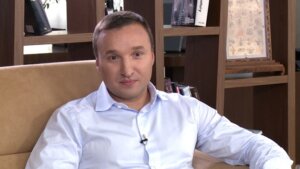
Andriy Kiselyov, owner of UkrMet Holding, provided his view on the consequences of the ban on scrap metal exports currently discussed in the Cabinet of Ministers of Ukraine, and also shared how smart state regulation of this industry could make it another powerful segment of the Ukrainian metallurgy that is attractive to investors.
— Is the Ukrainian domestic scrap metal market experiencing shortage and why was the issue of banning its exports raised?
There is no shortage; there is surplus. Steel plants are closing their gates to new shipments of scrap metal. There is a surplus of raw materials in the market. You can find out about it in the open sources: consumption of scrap metal by the steel makers in the past six months was 100% covered, around 300,000 tonnes was exported and nobody suffered from that. Everything that is being said is purely lobbyism of the steel companies to extract excess profit. You can see how the profits of all metallurgical companies grow, and there is not one scrap metal collecting company among them. Therefore, a ban or restriction of exports means subsidizing one industry at the expense of the other. We are not against steel companies making profit, but we would like it not to be done at the expense of the scrap metal collecting companies. Exports should not be limited, as they involve many formats of the economy: handling, freight, road transportation, railway transportation.
— What is the format of discussion of the ban on scrap metal exports and who is the key beneficiary of the ban?
The lobby of scrap metal collectors cannot be compared to the steel makers lobby, as the latter has more power and possibilities. They do not want to or it is simply not beneficial to them to sit down and negotiate with somebody. It is because the steel makers hold a monopoly position – they are the buyers of this type of raw material, represented by two-three companies. This situation allows them to set one purchase price for scrap metal in a coordinated manner. The Anti-Monopoly Committee needs to look into that, provided the committee deems it necessary.
— What will happen if the ban on scrap metal exports is passed?
This will lead to the degradation of industry, decrease of the number of players, which is actually already happening on a critical scale. Other consequences are the loss of jobs, shutdown of scrap collecting workshops, reduction of the volumes of collection. The consequences will be extremely negative for the entire industry. It will also impact the steel makers.
— How could the scrap metal collection industry develop if there were smart state regulations in place?
For example, we are considering the possibility of becoming a vertically integrated holding with the collection and processing of scrap metal becoming a plant. We are considering construction of a new modern plant in Ukraine.
Nobody in the countries with market economy can even imagine one sector infringing on the other
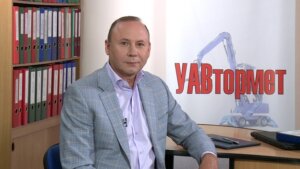
Volodymyr Bublei, President of the Ukrainian Association of Secondary Metals, talks about the risks the ban on scrap metal exports carries for Ukraine and the economic losses that country has already been experiencing due to uncertainty of the legislative regulation.
— What is the reason behind the idea to ban scrap metal exports and what is the probability of Ukraine resorting to taking such a step?
Ukrainian steel makers do not wish for an alternative to exist. They want to be the sole consumers of scrap metal with all the benefits it involves. There is a banal economic interest in this. Ukraine is a member of the World Trade Organization and we have obligations, including, for lifting any restrictions on exports and imports. When we signed the Association Agreement with the EU, we undertook to set the duty this year for the supplies to the European Union at EUR 5/tonne, and the following year – EUR 3/tonne.
— What will happen if the ban on scrap metal exports is passed? Is there scrap shortage in the market, which the supporters of the ban point to?
Export supplies account for around 10% of the total scrap metal collection, with 90% going to the domestic market. If the ban on exports is introduced, market indicators will disappear and this will lead to the losses of the scrap metal collectors. In Ukraine, however, the state-owned companies, such as UkrZaliznytsya, Energoatom, Ukroboronprom and others generate a lot of scrap metal. It is logical that if the exports are banned, the consumers will dictate the prices for scrap metal, i.e. steel makers. Naturally, when you are the only consumer, you offer the lowest possible price. In this case, also the state-owned companies, i.e. the state, will incur losses.
— Are there any ways to achieve a regulatory balance of interests between the scrap metal collectors and consumers?
We proposed different mechanisms. However, the majority of them come down to the necessity to set a duty based on the prices, and with some minimum threshold, for example EUR 15. And if the export price goes beyond this threshold, the rate of the export duty can be raised. This will ensure a certain balance. However, our proposals were not supported.
— If the purchase prices for scrap metal are determined by a tight group of buyers – isn’t that a reason for the Anti-Monopoly Committee to investigate the situation?
Our Anti-Monopoly Committee is looking at this situation ‘with eyes wide closed’. Of course, they see what is going one, it is not difficult to trace. There are currently only three groups that are the main consumers – Interpipe, MetInvest and ArcelorMittal. Whether they increase or reduce prices in a coordinated manner or not is their internal policy. There is an anti-monopoly authority and it either sees it or not. Over the recent period, the industry has lost around 1.5 million tonnes of collected scrap metal; we lost over 600 companies that simply left the business in the past 5 years. We lost 12,000 jobs in our industry.