Europe’s most popular singing event, Eurovision Song Contest, may be fun and play onstage. Yet offstage, the annual glitzy talent show leaves some of its participants stranded in debt. At least in Ukraine.
Singer Olena Kucher, a.k.a Alyosha, is still paying the price for her performance of a single song — “Sweet People” — in Norway during this year’s Eurovision. She scrambled into the 10th position, leaving 29 other contestants behind. Not bad for a starting talent with vocals resembling those of American Pink. Yet the party was truly over when Alyosha realized she had a nearly half-million dollar debt to repay to get her to the show.
Vadym Lysytsia, Alyosha’s producer, together with his 24-year old starlet, fumes when it comes to discussing their bill from Oslo, made possible he said by promised sponsorships that never materialized.
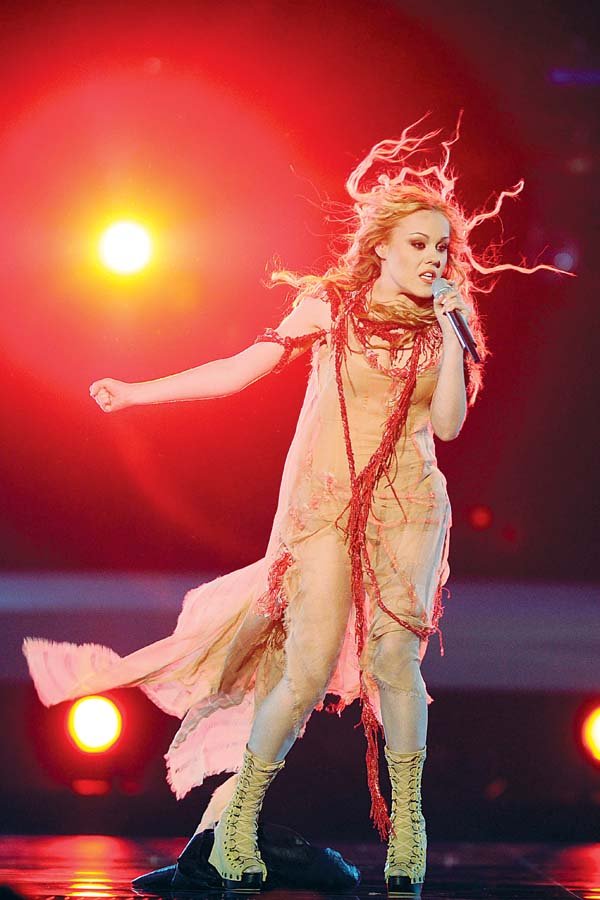
Alyosha went $450,000 in debt to finance her non-winning performance. (AFP)
“It was all so inspiring in the very beginning, but when the show was over everybody forgot their promises and I was refused help,” Alyosha said. “Today I’m pretty depressed over my huge debt.”
Her budget included $50,000 for a video filmed in Chernobyl, $220,000 for a promotion campaign around Europe and $1,600 for a designer dress, among other expenses. Governments are supposed to cover participation fees, travel and all other frills as required by Eurovision rules. It appears that “Ukrainian government has been failing to deliver for the seventh year in a row,” according to Lysytsia.
We have basically paid from our own pockets for the nation’s reputation”
– Vadym Lysytsia, Alyosha’s producer.
His words ring true for many former contestants from Ukraine. Their attempts of raising funds were sometimes more original than songs presented.
Singer Oleksandr Ponomaryov pioneered the big European gig in 2003 in Latvia. Saving on travel, he was busing to the capital of Riga instead of flying.
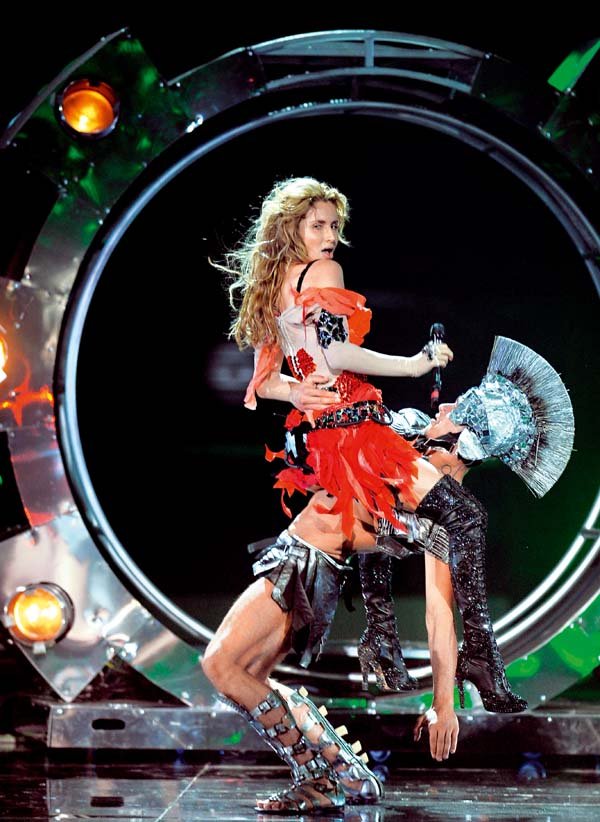
Svitlana Loboda, Ukraine’s Eurovision entrant in 2009, mortgaged her flat to cover participation fees. (AFP)
Ukraine’s agent provocateur, Svitlana Loboda, mortgaged her flat to scramble and raise $100,000 to perform and strut in black-leather underwear. Ironically, her performance of “Anti-Crisis Girl” in 2009 cost her hundreds of dozens of dollars that “the state failed to cover.”
“I had to give all I had and even more,” said Loboda, refusing to monetize the total cost of her singing and sexy acrobatics. Only after a very busy tour in Europe, which ended just a couple of months back, she said was able to settle her debts and finally live up to her “anti-crisis” headline.
Alyosha, however, still has a long way to go. Among other companies, she has to pay her dues to the CFC Consulting agency, which has led singer Ruslana to victory in 2004 contest.
It’s still a secret to me why singers who represent Ukraine and carry our national flag are not supported by Ukrainian government”
– Gennadii Kurochka, CFC’s managing partner.
In Ukraine, however, Eurovision financing is one of many eyesores. “Unfortunately, there are no funds in the state budget for it,” said Walid Harfouche, deputy head of the National State Television Company, which claims broadcasting rights to the contest. “Each year national winners have to fund their participation themselves on international stage.”
Presidential deputy chief of staff, Hanna Herman, could perhaps add more clarity to Alyosha’s predicament but refused to do so. In March, Herman announced publicly that the government would help cover Eurovision expenses.
Alyosha’s producer, Lysytsia, thinks that geopolitics is to blame: “[They] don’t need Eurovision at all because we are heading towards integration with Russia, not Europe.”
The song “Sweet People,” which calls on people to stop polluting the Earth, turned out quite bitter for Alyosha at the end of the contest. Yet the singer kept it on the tour program across Europe to raise awareness about both ecology and her debts.
It’s a pity Eurovision doesn’t allow politically charged lyrics in its pop-culture orgy of song and play. Ukraine’s contestants would have been inspired like no other.
For more information on Alyosha: