The March 2020 dismissal of Andriy Zagorodnyuk, Ukraine’s defense minister at the time, was an unpleasant surprise for the country’s security community.
Zagorodnyuk was the first defense minister with a civilian background. His appointment complied with the doctrine of civilian control of the military, which is crucial for rapprochement with NATO.
Popular among anti-graft watchdogs and reform advocates, he represented something new in contrast to the post-Soviet establishment that had rendered Ukraine’s defense helpless before Russia’s invasion of 2014.
Yet President Volodymyr Zelensky replaced him with Andriy Taran, a 65-year-old retired lieutenant general, a man of the old system. The change almost immediately made itself felt: many in the community complained about the return of Soviet-style red-tape bureaucracy, poor communications, and furious conflicts with the Armed Forces command.
From Zagorodnyuk’s perspective, the ministry’s efficacy is truly low, not because of the name at the top but because its broken governance model ignores the very idea of a Western-style, civilian defense ministry.
“We’re seeing now the worst crisis of civilian control of the military since 2014,” the former official said in a recent conversation with the Kyiv Post.
“The military organization has become far more fenced off from the community (than several years ago)… Now it’s all closed. And at the same time, never before had we such a difficult period in the affairs between the military leadership and the Defense Ministry.”
No conflict?
A year after his dismissal, Zagorodnyuk says he has no plans to shoot for public office again.
Instead, he decided to establish a new think tank, the Center for Defense Strategies. He hopes to one day develop it into the Ukrainian version of the RAND Corporation, the famous security analysis center working for the U.S. government.
Before his appointment, Zagorodnyuk had a career in large business management. He had no background in the military or the government, which is why many saw his appointment in late August 2019 as a fresh start.
New national security legislation passed in July 2018 as part of the NATO reforms package required the defense minister to be a civilian with no ties to the military establishment. The minister must represent the civilian national government and have authority over the military’s strategic decisions and resource management.
Meanwhile, the military is supposed to carry out its civilian leadership’s policies and focus on the art of soldiery. This doctrine, common in Western democracies, was invented to prevent armed forces from turning into an uncontrolled state within a state, absorbing more and more resources and power.
In office, Zagorodnyuk emphasized strategic-minded planning in procurement, resource spending, and combating excessive bureaucracy.

Ukraine’s Defense Minister Andriy Zagorodnyuk talks to the Kyiv Post on Jan. 30, 2020. (Volodymyr Petrov)
Read more: Defense minister: Ukraine’s military overhaul has an eye toward NATO
The Zelensky administration never explained his abrupt dismissal after only six months in office.
This triggered rumors and speculations. Sources at the Presidential Administration suggested that Zagorodnyuk had “not showed his worth” in the ministry.
Other media said Andriy Yermak, Zelensky’s chief of staff, had an acute conflict with the defense minister due to Zagorodnyuk’s strong opposition to disengagement in Donbas, which was in progress in 2019 and 2020. Yermak, who is seen by many as an aggressive advocate of a deal with Russia, had allegedly persuaded the president to sack Zagorodnyuk.
Zagorodnyuk did not confirm this.
“Yermak has never been my counterparty on the matter of Donbas disengagement,” he told the Kyiv Post.
Moreover, Zagorodnyuk said he had actually endorsed the mutual withdrawal of troops from some areas to make the civilians’ lives easier. But based on expert evaluations, he strongly opposed the Russian suggestions of all-out disengagement along the 420-kilometer front line — and the presidential administration agreed with him.
Read more: Illia Ponomarenko: Ukraine lost its chance for civilian, business-minded defense minister
Wartime minister
Zelensky at some point opted to dispense with the civilian defense minister experiment, even though civilian authority over the military has always been a crucial part of the NATO reform.
“But at the same time, there was another opinion saying that the military must be in charge during wartime,” Zagorodnyuk said. “This concept is very different from that of NATO… but that was his call. And he appointed a retired military general.”
As he waved goodbye to Zagorodnyuk, the president said that his replacement would gain the respect of the Armed Forces, and that his appointment had already received consent from the army.
But in fact, Zelensky simply rolled the situation back to having the same old Soviet general in a civilian defense minister’s office. Taran was honorably discharged in 2016, so Zelensky’s decision followed the letter of the law but not the spirit of civilian democratic oversight.
In many ways, the country’s defense sector, in which the Soviet way of thinking is strong, still fails to acknowledge the Western doctrine.
A year after the new appointment, many in the expert community are deeply critical of Taran.
He has been repeatedly accused of failing to centralize policy-making, which led to chaos and low efficacy. According to numerous reports in the media, the military’s chronic shortcomings concerning maintenance, nutrition, munitions, procurement and corruption get little attention and see no effective solutions.
Moreover, the sector is shaken by an ongoing conflict between Taran and Ruslan Khomchak, the armed force’s general-in-chief. The two have waged a legal battle over each other’s powers in the use of military aircraft to fly cargo for private contractors.
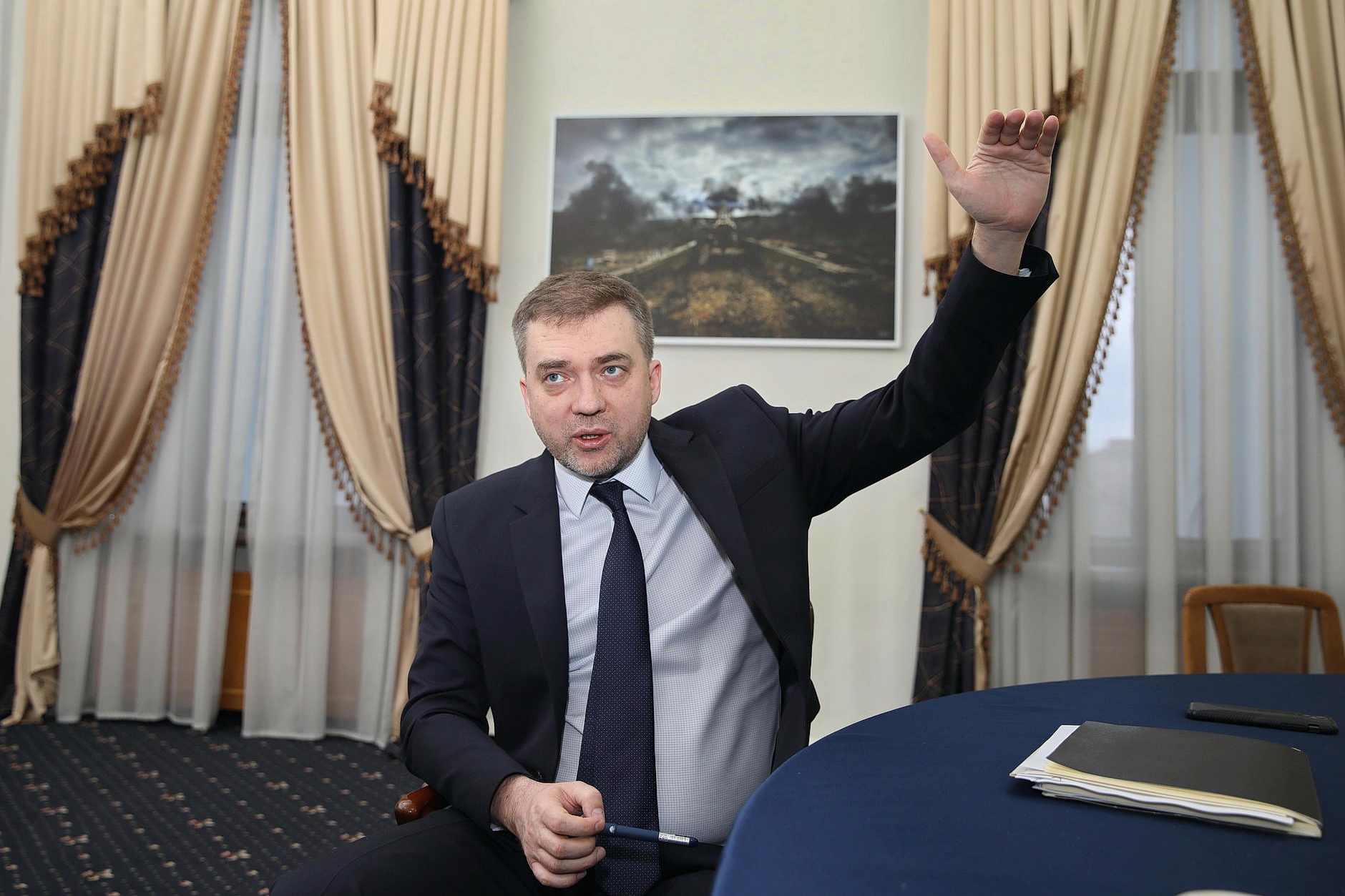
Ukraine’s Defense Minister Andriy Zagorodniuk talks to the Kyiv Post on Jan. 30, 2020. (Volodymyr Petrov)
Taran’s ministry never offers public reactions to the criticism in media.
From Zagorodnyuk’s point of view, this conflict comes from Ukraine’s extremely vague framework of defense governance. The limits of authority of government officials and military officers are too obscure.
Ignorance of the more progressive Western model makes the problems worse. “There must be no question who is the country’s most senior military leader,” he said. “Because if the defense minister is retired but still wears colors during his visits to the war zone, rivalry takes place. And it is very harmful to the war effort.”
Failure to ensure good defense governance also undermines Ukraine’s relationship with NATO. According to Zagorodnyuk, civilian control of the military is the alliance’s “only uncompromising requirement without the fulfillment of which they are not even going to talk about our membership. Our optimistic expectations regarding Ukraine getting the NATO Membership Action Plan this year will be absolutely groundless if we don’t get this issue resolved.”